


The Environmental Impact of Coffee Roasting: How to Choose Eco-Friendly and Sustainable Roasting Solutions
Coffee roasting contributes a measurable portion of a coffee supply chain’s carbon footprint, and equipment choice at the roast stage can materially reduce greenhouse gas emissions, VOCs, and particulates. This guide explains what those impacts are, how different roaster technologies affect emissions and energy use, and practical criteria for selecting an eco-friendly roaster for small-batch and commercial settings. Readers will learn how electric and fluid bed designs, heat recirculation, and ventless systems work to lower on-site combustion and exhaust, plus operational considerations that influence lifecycle emissions. The article maps technical explanations to buyer-focused guidance, covering emissions types, energy comparisons between gas and electric roasters, the mechanics and benefits of fluid bed systems, and economic trade-offs for small roasters. Finally, it connects these insights to product-level choices by explaining how specific features—such as all-electric operation and ventless designs—translate into measurable sustainability outcomes and next steps to Purchase Coffee Roaster if you decide to act.
What Are the Key Environmental Impacts of Traditional Coffee Roasting?
Traditional coffee roasting emits several pollutant types and consumes energy in ways that can increase a roastery’s carbon footprint and indoor air quality risks. The roasting process generates CO2 through fuel combustion or indirectly via electricity production, releases volatile organic compounds (VOCs) from pyrolysis of organic matter, and emits particulates and chaff that can affect worker health and nearby communities. Inefficient heat use and lack of after-treatment systems amplify these impacts, while venting untreated exhaust contributes to local air pollution. Understanding these emissions, their sources, and mitigation options is the first step toward selecting lower-emission roasting equipment.
What emissions are produced during coffee roasting? This subsection defines the major pollutant classes, traces how each arises during roasting chemistry and airflow, and suggests practical mitigations such as filtration and electrification.
Below is a concise EAV table summarizing emission types, their primary sources during roasting, and common mitigation approaches to clarify where controls apply.
Different emissions arise from distinct roasting stages and require specific controls.
What Emissions Are Produced During Coffee Roasting?
CO2, VOCs, and particulate matter are the principal emissions produced during roasting, each with distinct origins and control strategies. CO2 results from direct combustion in gas-fired systems or indirectly from electricity generation when the grid uses fossil fuels; lowering CO2 requires switching energy sources or improving efficiency. VOCs form as organic compounds break down under heat and can be reduced with after-treatment systems or by altering roast profiles and airflow to minimize incomplete combustion. Particulates primarily come from chaff and fine roast debris, which mechanical collectors and filtration can substantially reduce. Understanding the source of each emission guides targeted mitigation and equipment selection.
How Does Energy Consumption Differ Between Gas and Electric Roasters?
Energy consumption differs in how energy is delivered and how emissions are accounted: gas-fired roasters emit combustion products on-site, while electric roasters shift some emissions upstream to power generation. Gas systems produce direct CO2 and combustion particulates during roasting, whereas electric systems eliminate on-site combustion but incur indirect emissions depending on the electricity grid mix and whether renewables are used. Efficiency and control systems also matter: designs that recirculate heat or reduce roast time lower kWh or BTU per kilogram roasted. Buyers should consider both on-site emissions and the broader lifecycle impact of their energy source when comparing roaster types.
This section discusses how energy is consumed and emissions are generated in different roaster types.
Reducing Energy Use in Batch Coffee Roasters with Afterburners
The operation of batch, gas-fired coffee roasters equipped with afterburners that destroy roasting-generated volatile organic compounds (VOCs) and carbon monoxide is described. Overall heat and material balances are used to analyze and calculate energy use in such roasters and energy use reductions achievable by (a) transferring part of the heat now discharged in stack gas to gas streams in or entering the roaster or to coffee entering the roaster or (b) bypassing afterburners when VOC production is low.
Batch coffee roasting; roasting energy use; reducing that use, 2013
How Does Sustainable Coffee Roaster Technology Reduce Environmental Harm?
Sustainable roaster designs reduce environmental harm by altering energy source, improving thermal efficiency, and controlling emissions at the point of generation. Electrification removes on-site fossil fuel combustion, fluid bed mechanics improve heat transfer to reduce roast time and energy per pound, and heat recirculation lowers the total energy needed by recovering waste heat. Ventless or after-treatment systems capture VOCs and particulates before exhaust reaches the atmosphere. Together, these technologies can substantially reduce per-batch energy use and pollutant release, supporting lower lifecycle emissions for roasted coffee.
What are the benefits of electric coffee roasters for emission reduction? This subsection defines how electric systems change the emissions profile, explains the mechanism of emission reduction, and highlights the interaction with renewable electricity procurement. It also shows how electrification simplifies ventilation and supports near-zero on-site combustion emissions when paired with clean power.
What Are the Benefits of Electric Coffee Roasters for Emission Reduction?
Electric roasters eliminate on-site fossil fuel combustion, directly removing combustion-sourced CO2, NOx, and related particulates from the roast environment. When the facility uses or contracts renewable electricity, the net carbon footprint of the roasting stage can fall dramatically because emissions shift upstream to the power mix rather than the roastery floor. Electric systems often simplify venting and compliance because they avoid burners and flue systems, reducing installation complexity and permitting burdens. Operationally, electric heating can be more consistent and easier to control, improving roast repeatability and reducing waste from inconsistent batches.
How does fluid bed roasting improve energy efficiency and sustainability? The next subsection examines the fluid bed principle, its effect on roast time and uniformity, and the downstream sustainability benefits such as lower kWh per pound and reduced rework.
How Does Fluid Bed Roasting Improve Energy Efficiency and Sustainability?
Fluid bed roasting suspends beans in a stream of hot air, enabling rapid, even heat transfer that shortens roast times and reduces energy consumption per pound. The efficient convective heat exchange minimizes temperature gradients and promotes uniform development, lowering the likelihood of over-roasting and reducing wasted batches. Faster roast cycles increase throughput for the same energy input and make heat recirculation systems more effective because recovered heat is reused in a compact thermal loop. For small-batch roasters, these operational efficiencies translate into lower kWh/batch and improved sustainability performance.
Why Are Low Emission Coffee Roasters Essential for Reducing Carbon Footprint?
Low emission roasters are essential because equipment choice at the roast stage is a direct lever for reducing lifecycle greenhouse gas emissions and local air pollutants. Roasting can represent a measurable slice of coffee’s overall footprint, and switching to low-emission technologies addresses regulatory pressures, consumer expectations, and operational cost drivers simultaneously. By reducing on-site combustion, controlling VOCs, and improving energy efficiency, low-emission roasters allow roasters to lower reported emissions, simplify compliance, and deliver sustainability narratives that align with customer values. The following EAV comparison highlights how different roaster types stack up on energy and emissions metrics to inform purchase decisions.
Comparing roaster types on core environmental attributes helps buyers see practical trade-offs between upfront cost and long-term emission reductions. The table below compares conventional gas drum, electric drum, and electric fluid bed roasters across energy source, typical environmental impact pathways, and illustrative operational outcomes.
How Do Heat Recirculation and Ventless Designs Minimize Roasting Emissions?
Heat recirculation captures exhaust heat and returns it to the roast chamber, cutting energy input needed for subsequent batches and lowering kWh per pound roasted. Ventless systems integrate filtration or after-treatment to remove particulates and VOCs before air exits, substantially reducing local emissions and the need for extensive ducting or external venting. Combining recirculation with ventless capture reduces both energy consumption and exhaust pollutants, which can lower HVAC loads and simplify installation in urban or small-retail settings. These mechanical features translate directly into lower operational emissions and lower costs associated with ventilation infrastructure.
What Is the Impact of Using Electric Roasters on Coffee’s Carbon Footprint?
Switching to electric roasting can reduce a roastery’s direct carbon footprint by eliminating combustion emissions, but the net CO2 impact depends on the electricity source and lifecycle accounting. When electricity comes from renewable generation, electric roasting substantially lowers per-pound emissions at the roast stage; when the grid is carbon-intensive, gains are smaller but still possible through efficiency improvements. Example calculations should account for kWh per batch, grid emission factors, and avoided on-site combustion to estimate percent reductions; even without full renewables, electrification paired with efficiency and heat recovery typically yields meaningful emission reductions over conventional gas-fired setups.
After explaining the problem and technological solutions, many readers will want practical purchasing options. For those ready to act, consider the availability of energy-efficient, all-electric fluid bed roasters that target small-batch operations—if you are prepared to move from learning to action, the next step is to Purchase Coffee Roaster from a supplier that offers models tailored to your throughput and sustainability goals.
How Does Coffee Crafters’ Valenta Series Support Eco-Friendly Coffee Roasting?
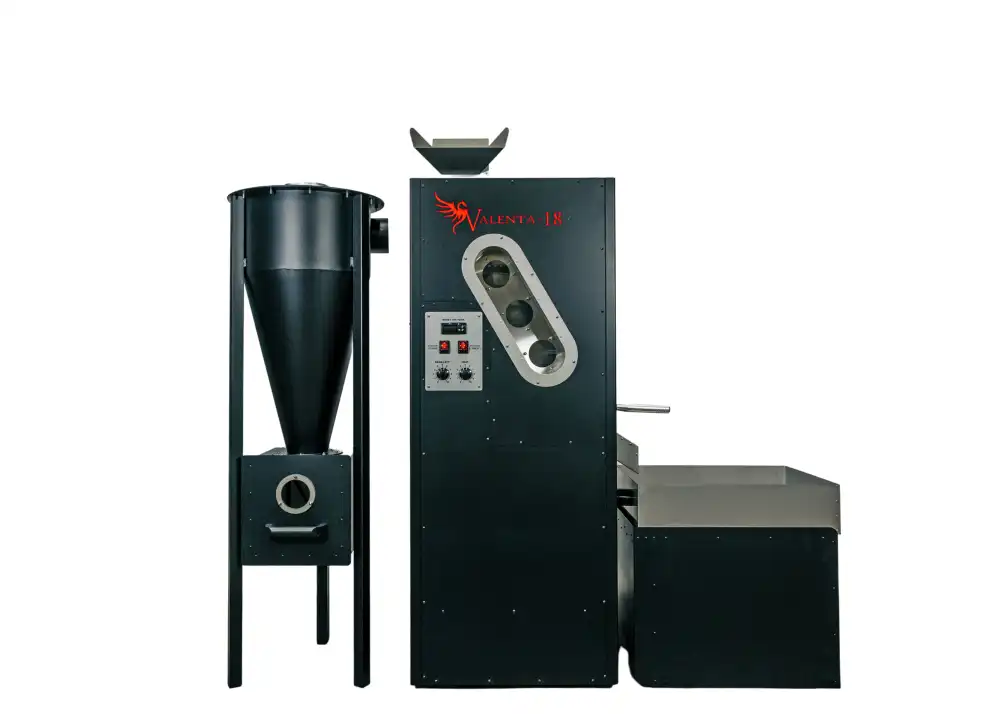
Coffee Crafters offers the Valenta series of fluid bed coffee roasters designed for users ranging from enthusiasts to small commercial roasters, and the product line emphasizes energy-efficient, all-electric operation that aligns with low-emission roasting strategies. The Valenta models—Valenta 3, 8, 12, and 18—reflect different throughput scales while retaining fluid bed mechanics, energy efficiency, and simplified installation compared with gas-fired drums. Mapping features to environmental outcomes shows how specific Valenta design choices support lower on-site emissions, easier venting, and compatibility with heat recirculation or ventless setups. Below we outline key sustainability features and how they translate into operational benefits for small-batch roasters considering a low-emission investment.
What sustainability features make Valenta roasters a smart choice? This subsection maps feature to environmental and operational value, using the product line as an example of how all-electric fluid bed design supports sustainable roasting, and ends with a concise transactional cue to Purchase Coffee Roaster for readers ready to buy.
What Sustainability Features Make Valenta Roasters a Smart Choice?
Valenta roasters are all-electric fluid bed machines that remove on-site fossil fuel combustion and thus eliminate direct burner emissions during roasting. Fluid bed mechanics deliver efficient convective heating, shortening roast cycles and lowering energy consumed per batch, which can reduce kWh/batch compared with less efficient designs. The Valenta series emphasizes ease of installation and maintenance, which supports longer equipment life and fewer replacements—both important for lifecycle sustainability. For buyers ready to act, Coffee Crafters positions the Valenta line as a purchase option aligned with eco-conscious roasting; to move from evaluation to acquisition, consider the next step to Purchase Coffee Roaster based on your throughput and venting preferences.
How Does Made in USA Manufacturing Enhance Environmental Standards?
Manufacturing Valenta roasters in the USA can support environmental quality through stricter local regulatory compliance, transparent quality control, and shorter domestic supply chains that reduce transport-related emissions. Local manufacturing facilitates closer oversight of materials and assembly processes, which can improve product longevity and reduce waste from early failures. Domestic production also enables faster parts support and maintenance, reducing downtime and the carbon cost of shipping replacement components long distances. These supply-chain and quality-control advantages complement the Valenta series’ technical features to strengthen an overall sustainability proposition.
What Are the Economic and Operational Benefits of Sustainable Coffee Roasters?
Sustainable roasters provide economic advantages by lowering energy costs, simplifying ventilation and permitting, and enhancing brand positioning for eco-conscious customers. Energy-efficient designs translate to fewer kWh per pound roasted, which reduces monthly operating expenses and can improve margins for small-batch roasters. Ventless or simplified venting systems cut installation costs and limit the need for expensive ductwork and rooftop exhaust, while reliable, easy-to-maintain equipment reduces downtime and maintenance expenditures. Together, these operational benefits make a compelling business case for investing in lower-emission roasters, particularly for startups and small coffee shops where capital must deliver measurable returns.
How can energy-efficient roasters lower operational costs? The next subsection provides quantitative framing, ROI considerations, and practical examples for small-batch operators considering the switch.
How Can Energy-Efficient Roasters Lower Operational Costs?
Energy-efficient roasters reduce the kWh or BTU required per roast, directly lowering utility bills and improving cost-per-pound roasted. Reduced ventilation infrastructure for electric or ventless systems cuts upfront installation costs and ongoing HVAC loads, sometimes eliminating complex flue permits. Improved roast consistency from fluid bed designs reduces wasted batches and product loss, enhancing usable yield and revenue. When evaluating ROI, buyers should model energy savings over equipment lifespan, account for reduced maintenance and ventilation costs, and compare these operational savings against purchase price to determine payback periods.
Why is ease of use important for green roasting adoption? The following subsection explains how user-friendly designs accelerate adoption and sustain environmentally preferable practices.
Why Is Ease of Use Important for Green Roasting Adoption?
User-friendly roasters lower the training barrier for staff, enabling consistent operation that preserves efficiency gains and reduces rejects and rework. Simplified controls and predictable thermal behavior make it easier to maintain sustainable roast profiles that minimize energy use and emissions. Lower maintenance complexity supports longer equipment life and fewer replacement parts, which improves lifecycle sustainability. For small teams and independent roasters, intuitive operation is a practical enabler for transitioning to greener equipment and keeping sustainability measures in everyday practice.
How to Choose an Eco-Friendly Coffee Roaster: A Buyer’s Guide for Sustainable Roasting
Choosing an eco-friendly roaster requires balancing technical performance, emissions control, operational costs, and support infrastructure; this buyer’s guide provides a prioritized checklist and practical mapping of model features to decision criteria. Key considerations include energy source and potential for renewable electricity, emission control design such as ventless filtration and heat recirculation, operational metrics like kWh per batch and throughput, and serviceability and warranty support. We present a comparison table that helps buyers relate Valenta model features to operational attributes that matter for sustainability and then a decision checklist to guide next steps. After the checklist, readers ready to take action can choose to Purchase Coffee Roaster tailored to their throughput and sustainability goals.
What key factors should eco-conscious buyers consider? The checklist below offers prioritized decision criteria with concise explanations to guide equipment selection and procurement.
What Key Factors Should Eco-Conscious Buyers Consider?
Eco-conscious buyers should prioritize: energy source and compatibility with renewable electricity; emissions controls such as ventless filtration or catalytic after-treatment; thermal efficiency measured as kWh or BTU per batch; throughput capacity that matches production needs to avoid over- or under-sizing; and availability of local service and parts for long equipment life. Consider also installation complexity and permitting requirements, which affect upfront costs and sustainability by determining whether large venting systems are necessary. Ranking these factors by local grid carbon intensity and operational priorities will yield a practical selection strategy.
Why Are Coffee Crafters’ Valenta Roasters the Sustainable Choice?
Coffee Crafters’ Valenta series aligns with the checklist above by offering all-electric, fluid bed designs that focus on efficient convective heating and simplified installation for small-batch operators. The Valenta family’s scaling options—suited to different throughput needs—help buyers avoid oversizing, and the emphasis on ease of maintenance supports longer equipment life and reduced waste. For roasters assessing options, Coffee Crafters presents Valenta as a purpose-built choice that targets energy efficiency and reduced on-site emissions; readers who have weighed these criteria and are ready to proceed can choose to Purchase Coffee Roaster as their next step toward a lower-emission roasting operation.
- Select the right energy approach: Prioritize all-electric options if you can access renewable electricity to maximize carbon reductions.
- Match throughput to model size: Avoid oversizing to keep energy-per-pound optimized and reduce idle energy loss.
- Prioritize emission controls: Choose models with ventless filtration or compatible after-treatment for VOC and particulate reduction.
These three actions provide a concise decision path: align energy sourcing, size appropriately, and ensure emissions are controlled. If your evaluation points toward an all-electric fluid bed solution that fits your throughput, proceed to Purchase Coffee Roaster from a supplier whose models meet these criteria.
The article above integrates technical explanations, comparative data, and buyer-focused guidance to help small-batch roasters and coffee businesses reduce their environmental impact while maintaining operational efficiency. For readers ready to transition from assessment to acquisition, consider the actionable step to Purchase Coffee Roaster using the decision criteria and product mappings provided here.
We Build The World’s Most Affordable Coffee Roasters